

This month’s Changemaker spotlight belongs to Shilpa Tiwari. A wearer of many hats, Shilpa brings her passion and energy to each one: sustainability executive, anthropologist, biologist, educator, and founder. Across these roles, Shilpa focuses on climate, resilience, markets, and human-centred sustainability.
Q: Where did your sustainability journey begin?
A: I came to sustainability through an interest in international development. I wanted to understand how environmental and social issues played out in different parts of the world, and why a solution that worked in one place might fail in another.
Before I applied for my PhD, I read a New York Times essay that made the case, as I remember it, that business needed more anthropologists. The idea stuck with me. I wanted to understand how people actually get things done inside institutions, whose knowledge carries weight and who can bring people together when circumstances change.
Consulting took me across countries and industries, where I saw how differently a project could look to the people financing it and the people who would live with it. I moved into corporate roles because I wanted to turn recommendations into plans I could help fund and carry out. I chose to work in communications because I wanted more room for creativity. I could bring data and fieldwork together in a story that made clear what was at stake. I do that now in my writing for Corporate Knights, where I’ve covered everything from women-led poultry co-ops to climate finance.
Today, through Isenzo Group, I advise boards and management teams on how to build organizations that can withstand disruption and stay relevant as expectations evolve. I also founded No Women No Spice, which works with women farmers in Tanzania. I direct the Diploma in Social Responsibility and Sustainability at the University of St. Michael’s College, within the University of Toronto. What I love about this portfolio career is how much each role changes the way I do the others. Setting the terms on which I buy spices makes me a better adviser on supply chains and gives me a real business decision to bring into the classroom.
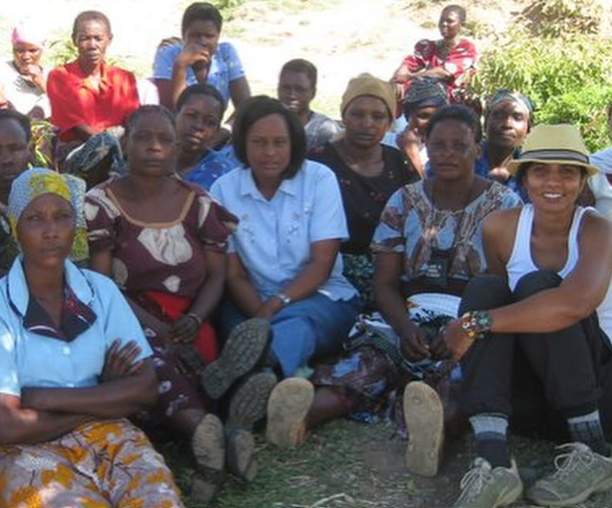
Photo: Shilpa with women farmers in Tanzania
Q: What’s been the most surprising thing you’ve learned in your career?
A: I’ve learned how rare it is to work across cultures, departments and disciplines and turn what different people know into a plan they can carry out together. That skill matters most when everyone is working on the same project and each has a different measure of success.
Take Rusumo Falls, a World Bank–funded hydropower project involving Burundi, Rwanda, and Tanzania, where I led resettlement planning. A lender might ask whether families would be fairly compensated. Government officials had to think about how to deliver a regional power project while meeting their obligations to the people it would displace. And a family might ask a question that could only be answered by understanding how they made a living in the first place: Where will we farm after we move? My job was to make sure that question carried enough weight to shape the plan alongside the financing and the construction schedule.
Q: What are some accomplishments you’re especially proud of?
A: I’m proud to be a biologist and a social anthropologist, and to have brought both disciplines, along with my training in policy, into investment committees and boardrooms. There were plenty of rooms where I could look around and tell that few people had come by the route I had. Over time, I learned to trust what that experience let me see. When we talked about risk, for instance, I wanted us to ask who would bear the cost if our assumptions were wrong. The answer could look different from the boardroom than it did from the places I’d worked.
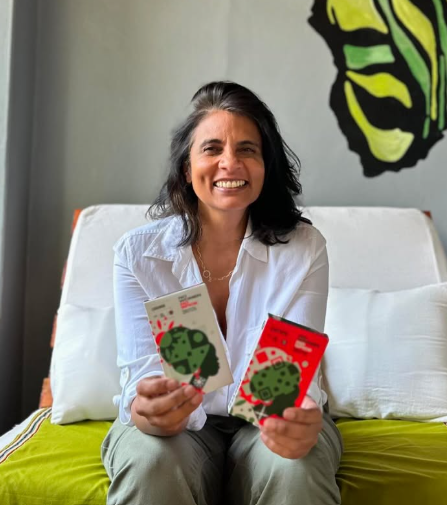
I’m proud of founding No Women No Spice in Tanzania. I’d spent years studying who earns what in global trade. Now I’m the buyer. I get to choose which farmers I buy from, what I pay and whether I come back the following season. When you’re trying to support women’s financial independence, a repeat order can matter more than anything you say about your mission.
I’m also proud of building a career that lets me advise, teach, write and run a business. I like what each of those jobs asks of me, and I like who I get to learn from in each one. For me, courage is letting go of work that no longer serves me so I can give more of my time to what matters to me now.
Photo: Zanzibar Cardamom and Zanzibar Black Peppercorns
Q: Where are you finding optimism today?
A: Mississippi. Scott Colom is set to become the state’s first Black U.S. senator since Reconstruction. I loved how his campaign used humour to turn an exchange about the price of beef into a conversation about what families could afford. In the middle of all that vitriol, he kept people’s attention on something they knew from their own lives. There’s skill in holding your purpose that clearly under pressure.
I felt some of that watching Abdul El-Sayed in Michigan and Peggy Flanagan in Minnesota make history. I think of them alongside Raphael Warnock in Georgia and Zohran Mamdani in New York. What gives me hope is seeing people build coalitions in places where others had already decided what was possible. We can get so used to seeing the same people in charge that we start to mistake familiarity for evidence of who can lead.
I’d love to see Canadian sustainability have that kind of shake-up. Think about who’s in the room when deciding what to prioritize.
Q: Why do you love what you do?
A: I love the people I get to meet and the way they change how I think. A farmer can change how I read a procurement policy. An investment analyst can show me where a good idea is likely to get stuck. A student can ask a question that changes how I teach. Some of the most meaningful moments in my career have been hearing directly from people about what a decision we worked on meant in their lives.
That’s part of why it means so much to me to direct the sustainability diploma at the University of St. Michael’s College. I know what it feels like to bring an experience into a room and have to explain why it belongs there before anyone asks what it might teach them. In this role, I can open up the conversation earlier. I can help shape whose work we study, whose experience informs the cases we teach, and what our students learn to look for when they’re trying to move a sustainability plan through an organization.
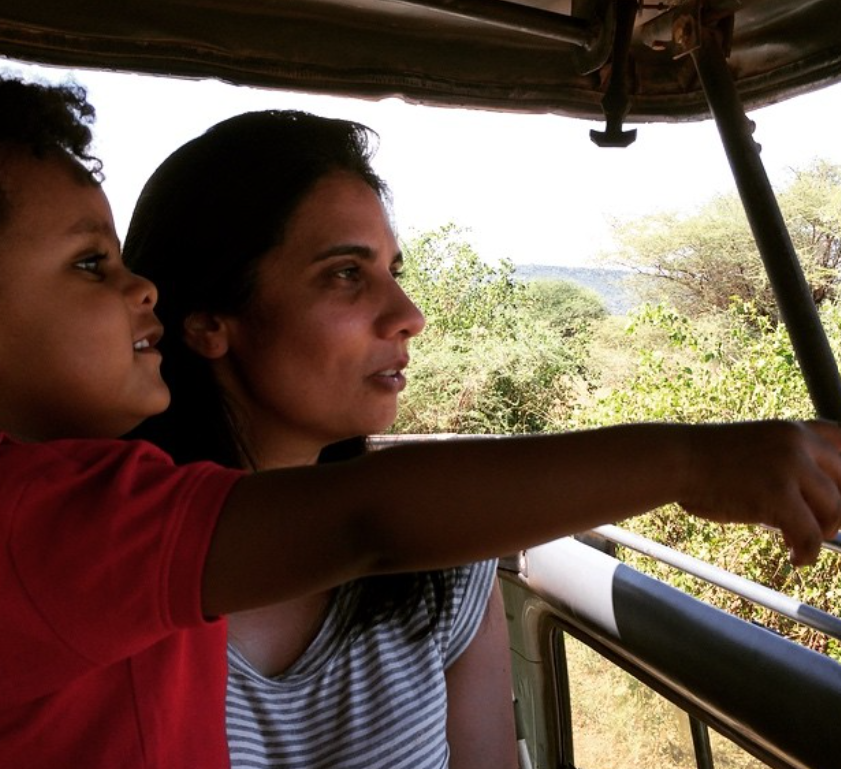
Photo: On safari!