
“One day my kids may ask me what I did”
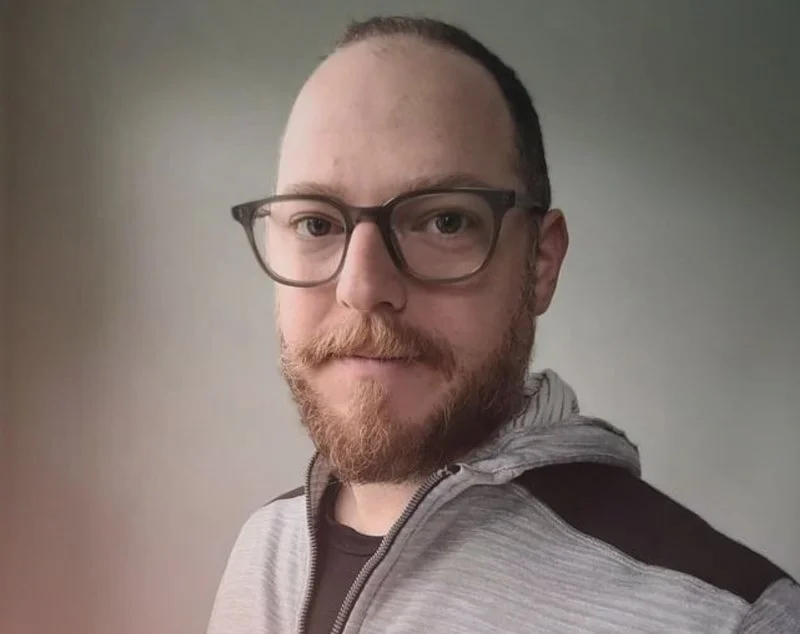
This week, we shine the Changemaker spotlight on a TOCW team member who is usually behind a camera asking the questions. Oren Falkovitz is a corporate marketer turned content producer and the Creative Director of Sustainable Storytelling. On a mission to make consequential work visible, Oren leads TOCW’s videography & storytelling.
Q: Where did your sustainability journey begin?
A: It really began when I had kids.
I knew that if I wanted to be the kind of parent I hoped to be — the kind where my kids could one day feel proud of the choices I made — I had to demonstrate a higher level of commitment.
That started with acknowledging that I wasn’t being as effective as I wanted to be. I had to raise the standard for how I approached living a more sustainable life, and eventually, how I approached my work.
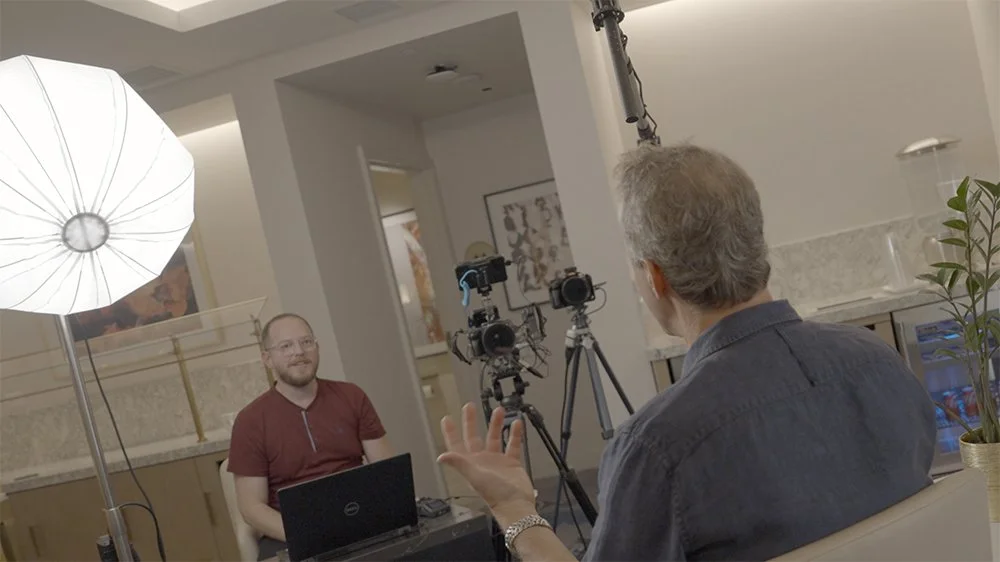
Photo: Oren behind the camera
Q: How do you define storytelling?
A: I define storytelling as a tool humans use to understand choices and outcomes.
When done effectively, storytelling helps us see a relevant challenge more clearly. It helps us understand what is at stake, what choices are available, and what positive or negative consequences may follow.
In climate work, that matters because the problem can feel too large, too abstract, or too distant. Good storytelling makes the issue more concrete. It helps people understand why something matters, what action is possible, and why that action is worth taking.
Watch: Local Climate Heroes, a short documentary for Climate North (the predecessor to TOCW)
Q: Tell us about a standout moment from the October 1–3, 2025 TOCW kickoff.
A: In my work, I get to interview people and learn about their lives. I get to hear the stories behind why they do what they do.
There are three answers from the kickoff that I don’t think I’ll forget.
I asked people to share the moment they knew they wanted to commit their lives to climate work.
Sanders Lazier, Founder of Carbonhound, talked about wanting to be ready for the day his son eventually asks, “What did you do about climate change?” That hit me immediately, because I feel the same responsibility with my own kids.
Lindsay Hampson, Founder of ThisRock, shared a story about her dad, who worked in steel his whole life, and one day apologized to her for the part he felt he had played. I thought that was such a powerful example of the intergenerational complexity that comes with climate change.
And Peter McArthur, Senior Advisor at Fort Capital, Founding Chair of the Ontario Clean Technology Industry Association (OCTIA) and Chair of the Canada Cleantech Alliance, talked about being in his 40s and waking up at night, concerned about the climate problem, which eventually pushed him to change the direction of his life and work in cleantech.
Those stories stayed with me because they felt honest. They weren’t abstract. They represented something I think a lot of people feel: concern, responsibility, regret, urgency, and the desire to do something useful.
Q: Where are you finding optimism today?
A: I find optimism in small moments with my kids.
On Earth Day, I was telling my younger child, who is three, “Today is Earth Day.” And my older child, who is five, immediately said, “Every day is Earth Day.”
And I said "YESSS. THAT'S EXACTLY RIGHT!"
Moments like that give me optimism because they show me that these ideas can become normal. They weren't always normal for me, but they can become part of how the next generation, and even our current generation, sees the world.
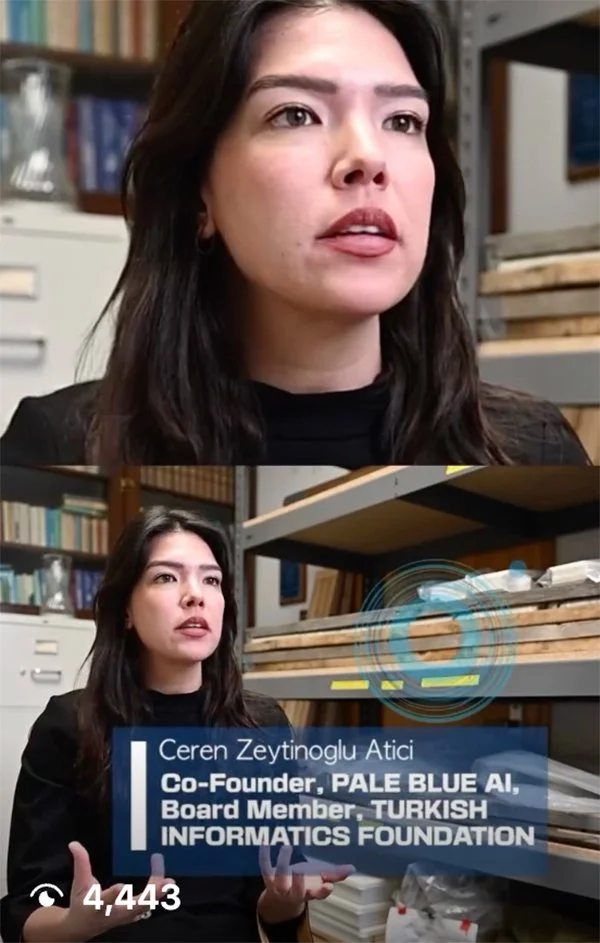
Photo: Watch a short brand documentary for Pale Blue AI, a company that builds open source AI-based climate solutions.
Q: Why do you love what you do?
A: I love what I do because it feels useful.
A lot of my own sustainability journey has been about raising my standards — as a parent, as a professional, and as someone trying to contribute more effectively.
Through Sustainable Storytelling, I get to help organizations show the standards they are trying to set. Some are working directly on climate solutions. Others are working seriously on their own internal footprint. In both cases, there are choices being made, tradeoffs being managed, and outcomes that deserve to be understood more clearly.
If I can help make that work visible, I feel proud of my contribution.
As Sanders said, one day my kids may ask me what I did, or how I contributed. I want to be able to give them a real answer.
Watch the TOCW 2025 Recap